
The method
Study, build, publish, and mostly don’t.
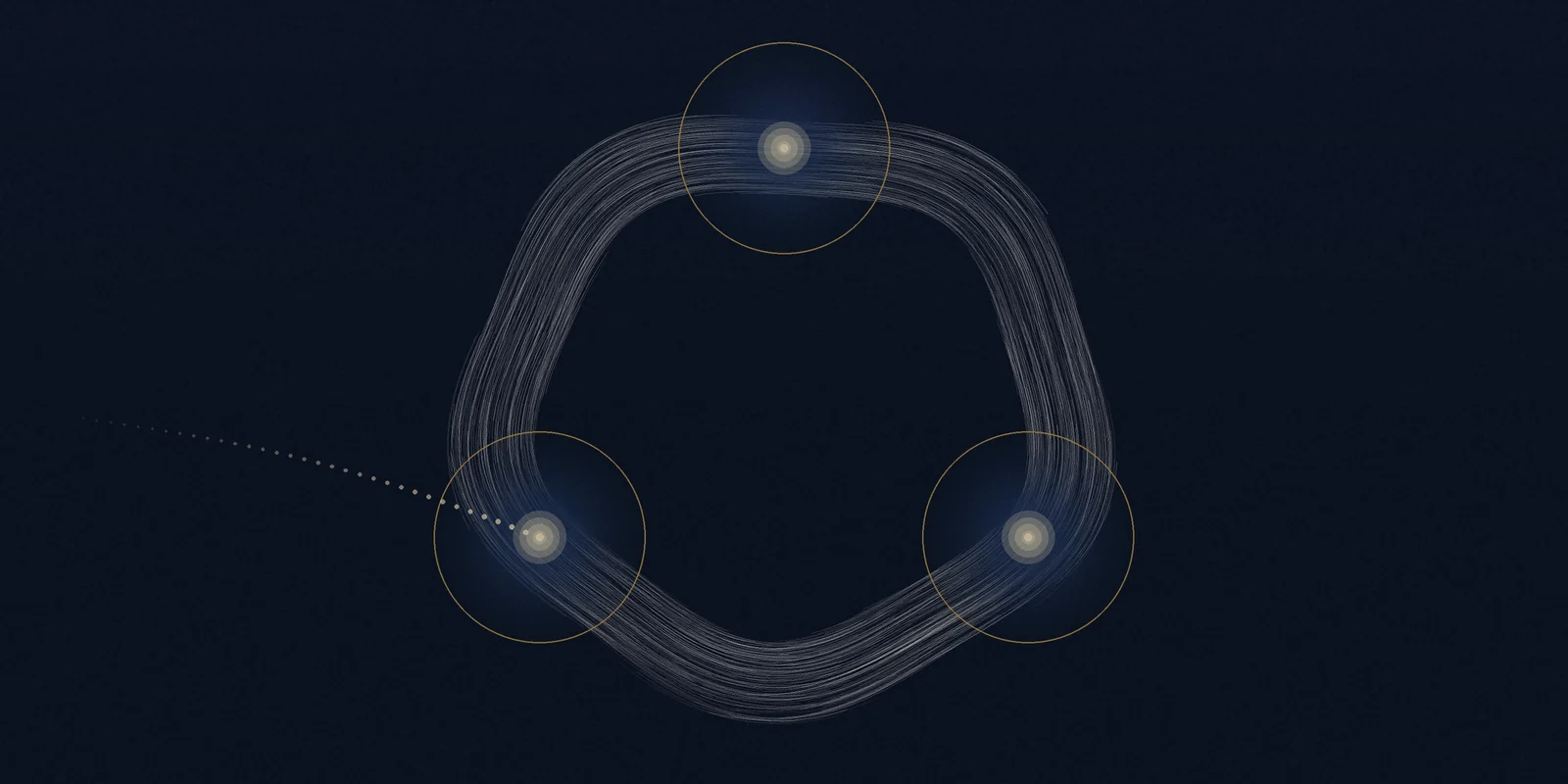
Three stages and one closed loop. The interesting part of the method is not the stages; it is the bar at the exit, and how much of the work never crosses it.
The shape of it
A research house is defined less by what it produces than by what it refuses to produce. Our method is ordinary in its stages and unusual only in its exit condition: the loop is closed, and the default is that work stays inside it.
The diagram below is the whole method. Everything after it is detail about how each stage is actually run.
The stages
- 01
Study
Live with the question before answering it.
The house studies at family scale, in its own home, with lived experience as primary data. This is a deliberate constraint rather than a limitation we are apologising for. A question about what it is like to live with an intelligent system cannot be answered in a session, and it cannot be answered by people who go home at the end of it.
What this buys is duration and honesty. We see the second month, when novelty is gone and the system is either useful or in the way. We see what a household does when nobody is being observed, because the household is us.
What it costs is generality, and we will not pretend otherwise. A finding from one home is a hypothesis about homes. We say so, and the standard for publishing rises accordingly.
- 02
Build
A working system is the argument.
We research by building. A design that has not been built has not been tested against the part of reality that matters: the part where a person is tired, the network is bad, and the elegant interaction turns out to require a decision nobody wants to make.
Building is also how a claim becomes falsifiable. A paper can be disagreed with; a system can be used, and using it settles arguments that discussion does not. This is why the unit of publication here is a working thing rather than a description of one.
It follows that we build fewer things than we could, and finish more of them than is comfortable. An unfinished system is not an argument. It is a sketch of one.
- 03
Publish
Only when there is something true to say.
Most of what the cycle produces stays inside it. That is the intended behaviour, not a backlog. A research house that publishes on a schedule is publishing to the schedule, and the work bends to fit.
What clears the bar goes to the Library, with its method and its limits attached. What does not clear it stays in the house and feeds the next turn of the cycle, which is the more common outcome by a wide margin.
The bar is deliberately awkward: could we defend this to someone who has read everything else in the field, and who has no reason to be generous? If not, it is not ready, and saying so costs nothing.
The bar
What we commit to
- We name the vantage
- Every finding says where it was seen from: how many households, over how long, and by whom. A result from one home is labelled as a result from one home.
- We publish the limits with the claim
- The conditions under which we expect a result not to hold are stated in the same document as the result, not left for someone else to discover.
- We do not publish to a calendar
- There is no quarterly cadence and no minimum volume. A quiet year is a possible outcome of doing this correctly.
- We say when we were wrong
- A superseded finding stays in the Library with its correction attached. Removing it would make the record tidier and less true.
- We separate the research from the commission
- Commercial work is delivered through Point It Here and does not enter the research record. A client cannot buy a finding, and a finding is not a deliverable.
Where this leads
The method exists to serve four questions. Each is a program of inquiry, and each is run this way.