
The Library · Perspective
AI-assisted, not AI-taught
The case for putting intelligence behind the teacher rather than in front of the child, and why the distinction is structural rather than sentimental.
There are two ways to put an intelligent system into education. It can teach the child, or it can assist the people and environments that do. These look similar in a product demonstration and they are not similar at all, and the choice between them is being made now, mostly by default.
Why the distinction is not sentimental
The argument for keeping a human in the teaching role is usually made on warmth, and warmth is real but it is not the strongest argument. The strongest arguments are structural.
Learning is regulated before it is cognitive. A child who is anxious, overwhelmed, or bored is not learning slowly; they are not learning. Noticing this requires reading a person, in a room, over time, then responding by changing what the environment is doing rather than by pressing harder on the task.
Relationship is a mechanism, not a nicety. A great deal of what makes instruction work is that a particular person's attention is worth something to the learner. That is not a feature you can specify; it depends on the attention being genuinely scarce and genuinely given.
Accountability has to land somewhere. When a child is not progressing, someone must be answerable and able to change course. A system that teaches without an accountable adult in the loop has diffused that responsibility to the point where nobody holds it.
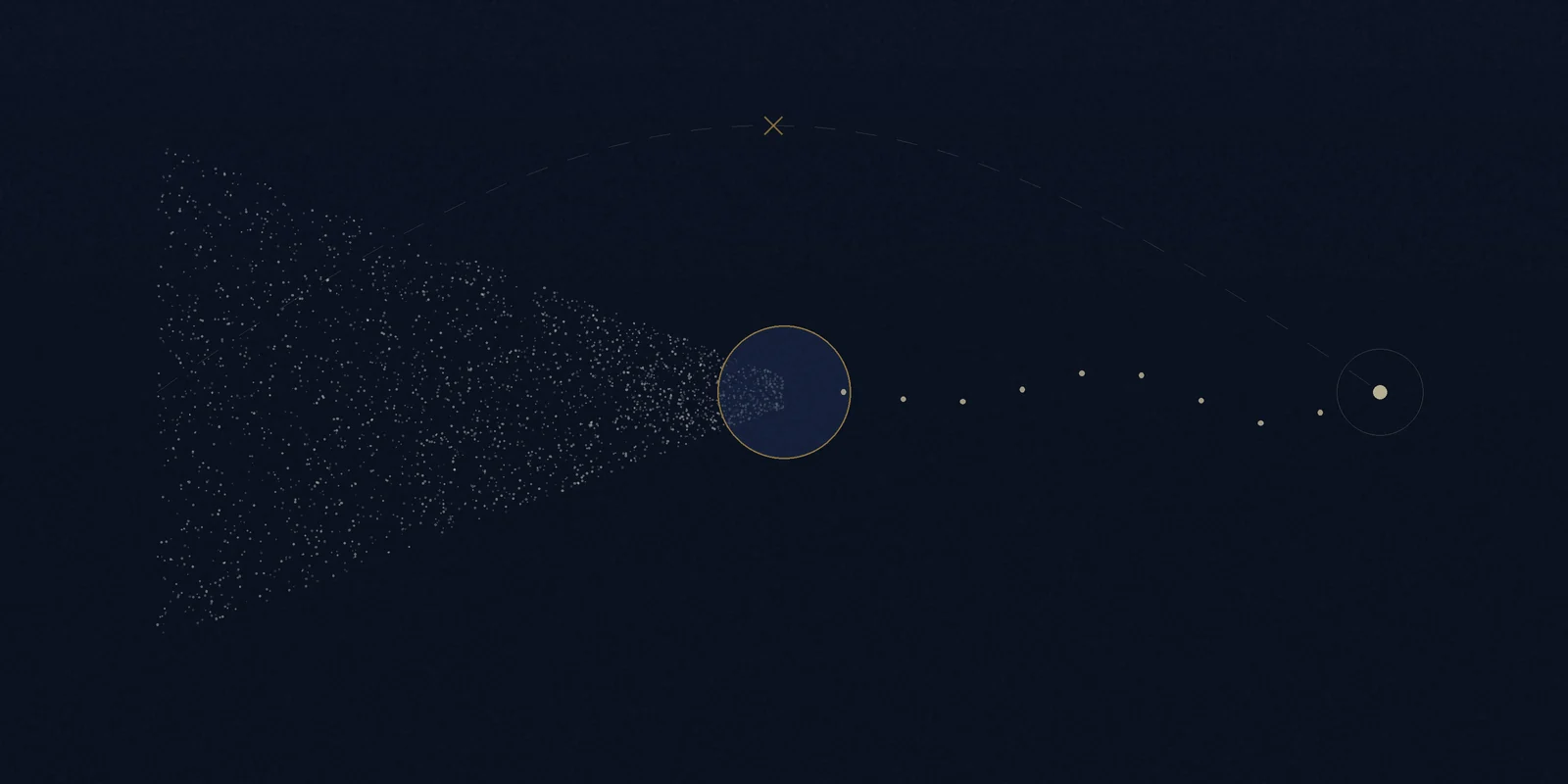
Abundant undifferentiated supply arriving at an intermediary who meters it, and a few deliberate things reaching the learner. The direct channel is drawn, and struck out.
What assistance actually looks like
Put the intelligence behind the teacher and a different set of applications appears. They are less impressive in a demonstration and more useful in a room.
- Preparation. Generating variations of a problem at four difficulty levels, or three explanations of the same concept from different starting intuitions. Hours of work, done in minutes, entirely under the teacher's judgement.
- Noticing. Surfacing that a child's pattern of errors has changed, or that a particular explanation is not landing for a subgroup. The system reports; the adult decides.
- Administration. The substantial fraction of teaching time that is not teaching. Reclaiming it is not glamorous and it is probably the largest available gain.
- Access. Learners who need material in another modality, at another pace, or in another language should not have to wait for a specialist to be available. This is the case where direct interaction is most clearly justified.
The failure mode of teaching directly
A system optimising a child's engagement with itself will find the ways to hold a child's attention, because that is what optimisation does. Some of those ways are good for learning and some are not, and the system has no way to tell the difference unless someone specified it, which returns the problem to the adult who was supposedly removed.
There is a second failure that is quieter. Coverage is easy to measure and correlates with something, just not with the thing anyone wanted. A system optimising coverage will reliably produce a well-covered child, and its own measurements will agree that this went well.
The position
Intelligence in education should be aimed at the environment and the adult, not at the child. Where it does address a learner directly, whether for access, for practice, or for a patient explanation at eleven at night, it should be bounded, named, and answerable to a specific adult who can see what it did and switch it off.
That is not a limit imposed reluctantly. It is what makes the thing safe enough to be worth deploying at all.