
The Library · Learning as Experience
The child is not the input
Curriculum generation is solved. The experience of learning inside an adaptive environment is not, and it is the part that decides whether anything lands.
The maison's impact initiatives include AskNoxe, a free AI tutor for homework help, and NOXE Smart Schools, technology-integrated school management for modern classrooms. They answer real, present-tense needs: a student stuck at 9pm, a school drowning in coordination.
SigmaClava's program sits behind those initiatives and asks the longer question: when intelligence becomes ambient in a child's education, what is the experience of learning actually like?
Curriculum is solved; experience is not
Generating a lesson is no longer the hard part. A model can produce a competent explanation of fractions in any voice, at any level, instantly.
The hard part is everything the lesson lands in: the child's pace that day, their regulation state, whether curiosity is currently alive or has been managed out of them, whether the environment reads struggle as data or as failure.
An adaptive system that adapts only the content has automated the textbook. The experience of attention, frustration, delight and recovery is still the child's problem to absorb alone.
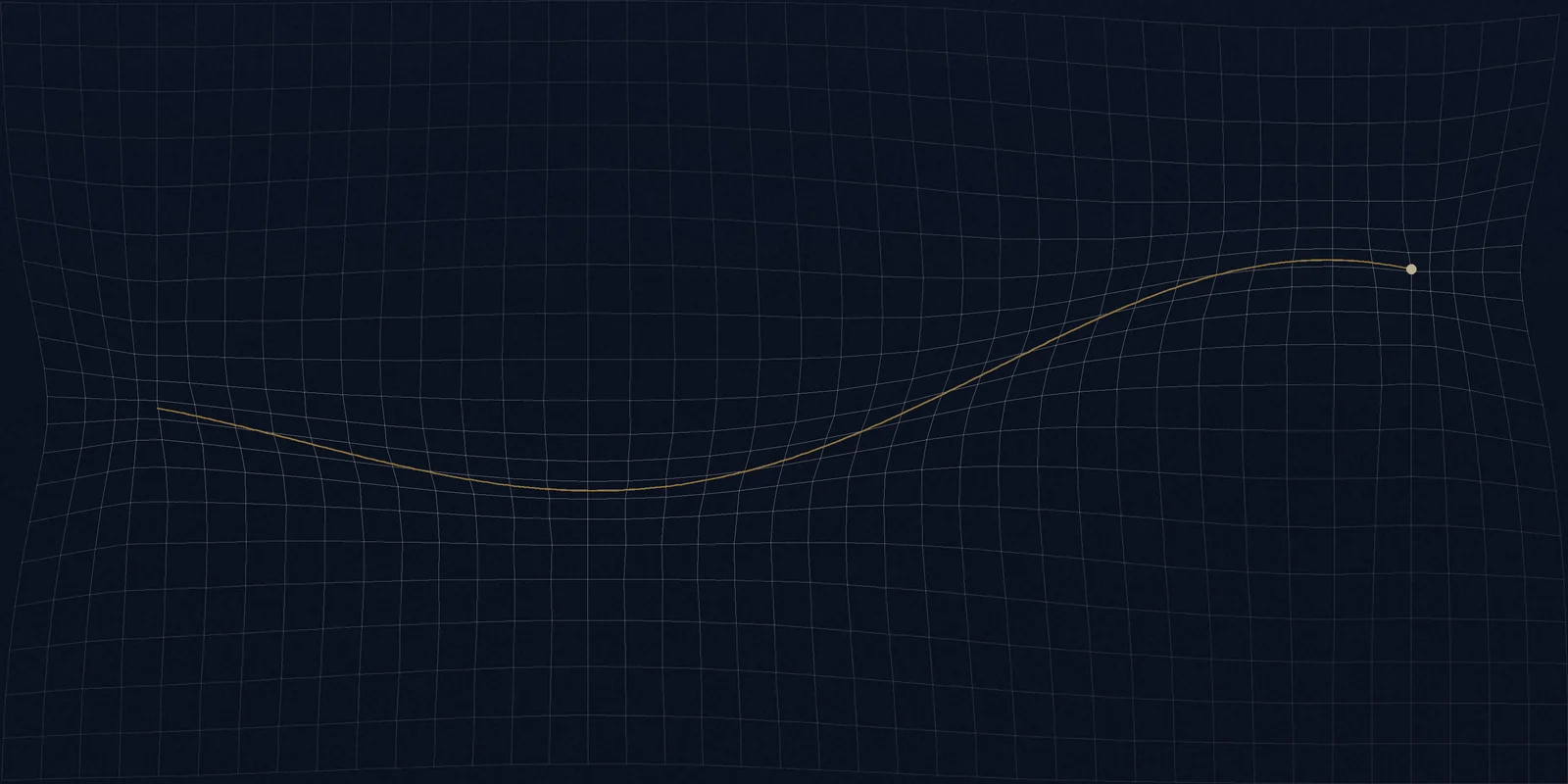
The lattice bending toward the learner's path rather than the path being straightened onto the lattice. Where the grid crowds, the environment is doing the adapting.
The coverage trap
There is a failure here that is quieter than a bad lesson, and harder to see because the system's own measurements endorse it.
Coverage is easy to measure and it correlates with something. A system optimising for coverage will reliably produce a well-covered child, and every dashboard will agree that this went well. What coverage does not correlate with is whether the child can still be bothered next week, which is the variable that determines everything downstream.
Adapting the environment, not the child
The program's founding commitment is directional: environments adapt to children, never the reverse. In practice we study:
- Pace as a right, not a parameter. Systems that treat speed as the child's property rather than the curriculum's schedule.
- Modality plurality. The same idea reachable by reading, hearing, building, arguing, because minds differ in how understanding arrives.
- Regulation-aware pacing. Learning systems that can tell the difference between productive struggle and a nervous system that needs the session to end, and act on it. A dysregulated child is not learning slowly; they are not learning.1
- Instrumentation that respects dignity. Understanding a child's experience without surveilling the child. This constraint is hard, and it is non-negotiable.
The minute after
If we had to name one place where the design is decided, it would be the minute after attention breaks. What the environment does then, whether it escalates, holds, redirects or stops, appears to set the shape of the rest of the session, and most systems spend that minute badly because they are still optimising the task.
The field
This program runs in the field, with real children, at family scale, where a bad design decision is visible by bedtime. That proximity is the program's method and its discipline.
Nothing about a child's learning will be claimed here that was not first lived with.
Notes
- 1This is the sharpest practical consequence of the whole program. Almost every adaptive system treats a stall as a signal to adjust difficulty, when the correct response is frequently to change what the environment is doing entirely, or to stop. ↩
From the program
Learning as Experience
AI can already generate curriculum. The open problem is the experience of learning: environments that adapt to the child rather than the child to them, across pace, modality, interest and regulation.