
The Library · Sensory & Ambient Wellbeing
The nervous system pays for everything
There is a bill most design never itemizes. The charges are small and continuous, the statement never arrives, and the balance shows up as exhaustion nobody can attribute.
There is a bill most design never itemizes. Every notification, every autoplaying video, every fluorescent hum and interface jitter draws on the same account: the human nervous system. The charges are small and continuous, the statement never arrives, and the balance shows up as exhaustion nobody can attribute.
This program treats that cost as real, measurable in lived terms, and, most importantly, designable.
Ambient is not neutral
"Ambient computing" is usually pitched as disappearance: the technology recedes, the magic remains. But nothing that emits light, sound, motion, or interruption has actually receded. It has only stopped announcing its costs. An environment full of quiet machines can still be loud in the register that matters, the one the nervous system keeps.
The sensory dimension of neurodivergent experience makes this cost visible to us where design culture averages it away. What most people experience as vague depletion, a sensitive nervous system experiences as itemized fact: that light, that loop, that latency. We treat that sensitivity as instrumentation.
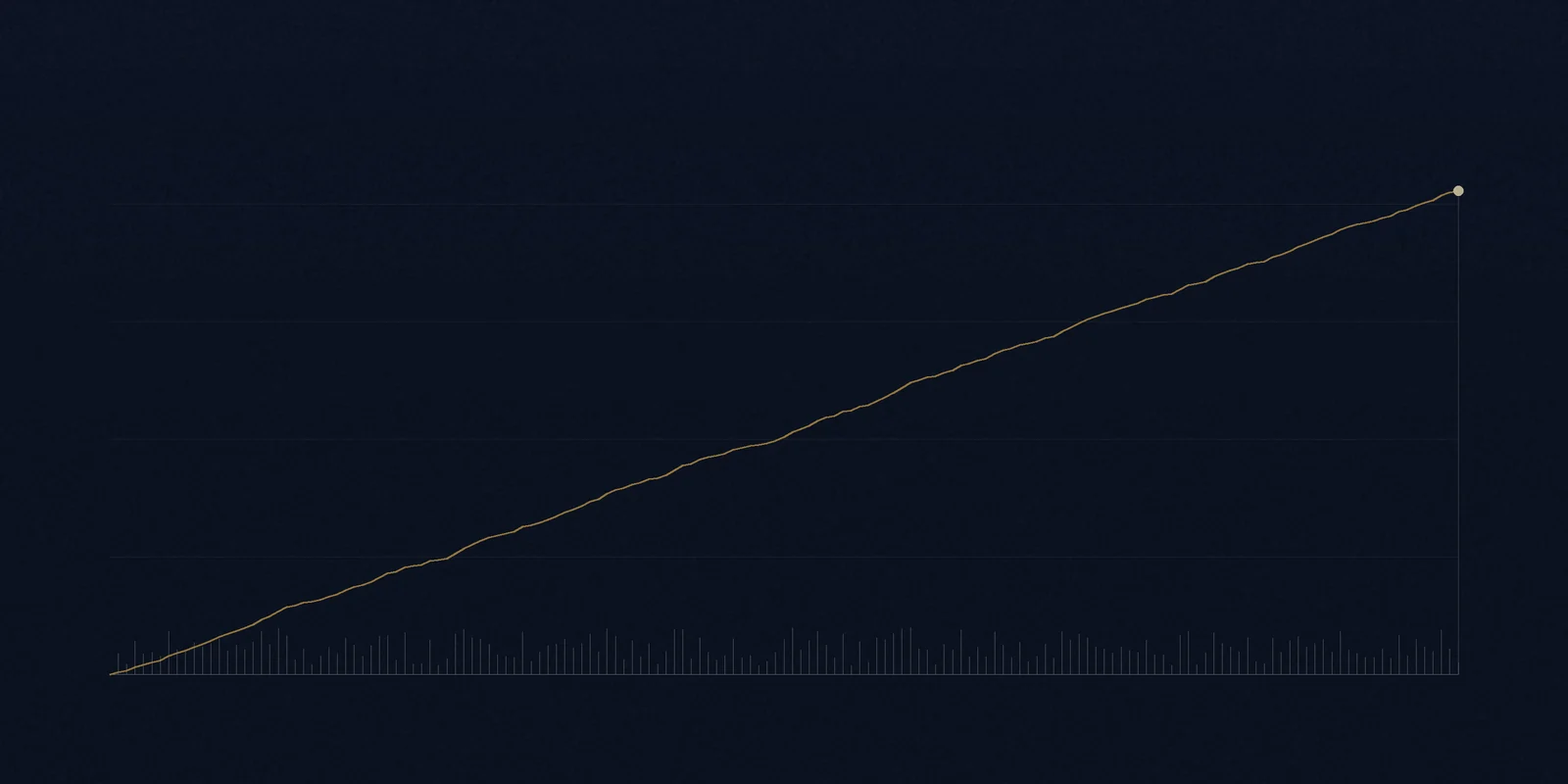
Each charge along the baseline is individually unremarkable. The climbing line is the running balance, which is the only part anyone ever perceives, as exhaustion, and usually without an attribution.
The hour after
The measurement problem here has a particular shape, and it is the reason the cost stays invisible.
Almost everything is measured during. Session length, completion, satisfaction at the moment of asking: all taken while the person is still inside the experience. What we care about is the hour after: what a person is capable of once the thing has ended.
Two experiences that test identically during can differ sharply afterwards, and only one of those differences shows up in a product metric. We call the gap recovery cost, and our position is that it is the honest unit for this program.
Materials with a price
The program studies sound, light, pacing, motion, and interruption as materials, each with a human price that a design can know about itself.
Interruption is the most expensive material in computing and the most casually spent. We study systems that treat attention capture as a cost center, not a KPI. A useful discipline is to give a system a fixed budget of interruptions per hour and see what it chooses to say when it cannot say everything. Most systems have never had to rank their own.
Pacing, whether of speech, of animation, or of demand, either entrains calm or entrains vigilance. Machines pick one whether their designers chose or not.
Sound and light are dosage problems. Environments can be composed the way a room is lit: deliberately, for the humans in them, with the machine's presence tuned to the nervous system's actual budget.
Status
This program is forming. Its first artifacts are internal: ambient and media systems in our own spaces, tuned and re-tuned against the most honest instrument panel we have: how the household actually feels at the end of a day.
When something is true enough to stand, it will be published here.
From the program
Sensory & Ambient Wellbeing
Environments, media, and machines all tax the human nervous system. How can they be designed to lower its cost of living instead?