
The Library
Why we publish slowly
On patience as method. Why the house publishes only when there is something true to say, and what that costs.
Most research organizations publish on a schedule. The schedule is honest about one thing, the need to be seen, and dishonest about everything else, because questions do not resolve on quarters.
SigmaClava publishes when there is something true to say. This is not modesty. It is method, and it has a price we would rather state than pretend away.
The cost of early answers
An answer published early does not merely risk being wrong; it changes what the house looks for afterward. Once a claim is public, the temptation is to defend it rather than test it. Patience is cheaper than retraction, and far cheaper than the slow corruption of a research program built around defending its own press.
This is not a hypothetical failure mode. It is the ordinary lifecycle of a research claim that went out before it was ready: the finding is announced, the caveats are dropped in summary, the summary is what gets cited, and the original team spends the following year in a position where every honest new result is a threat to their standing.
The defence does not usually look like dishonesty. It looks like methodological choices that happen to favour the existing answer, and questions that happen not to get asked.
What the bar is
Something is true enough to publish when it has survived being lived with. Our programs run at family scale first: systems we use ourselves, with our own children, our own attention, our own nervous systems as the instrument panel. A finding that holds up in a paper but not at a dinner table is not a finding about human experience.
Stated as a test: could we defend this to someone who has read everything else in the field and has no reason to be generous?
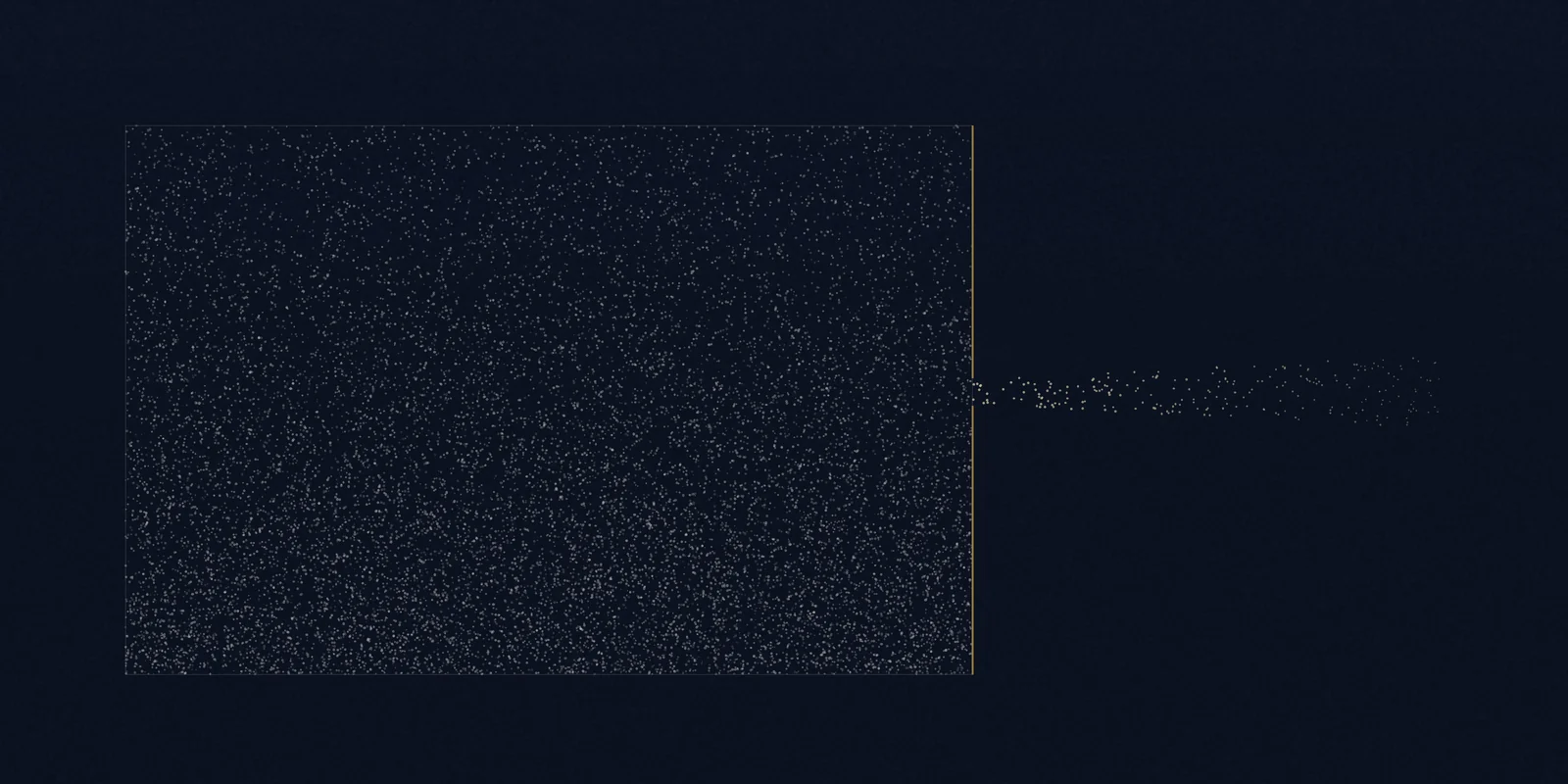
The body of work accumulating, and the gate it has to pass. The trail leaving at the right is everything that cleared the bar, drawn to scale against what stayed in.
Most work fails that test for one of three reasons, none of which is a failure of the work itself:
- The vantage is too narrow to support the claim being made. One household is not a population, and we will not write as though it were.
- The effect is real and we cannot yet say what produced it. An unexplained effect is a reason to keep going, not a reason to publish.
- The finding is true and already known. This one is the most common and the least discussed.
What we give up
Being honest about the method means being honest about what it costs.
It costs visibility. A house that publishes rarely is a house that is rarely cited, rarely linked, and rarely in the conversation. We think this is the correct trade and we do not pretend it is free.
It costs speed to influence. Someone else will say something adjacent to what we are working on, earlier and with less support, and it will shape the field more than a later and better-founded version.
What this page is for
The Library will grow slowly, and that is a feature you can check: every article here cleared the bar of being built, lived with, and still standing.1 If the page seems sparse, the sum is simply not finished, and it never will be. The ellipsis in the mark is load-bearing.
The house
Notes
- 1Entries marked Perspective are a separate category and are held to a different standard: they are argued positions on questions the house works near, not findings from its programs. They say so on their face. ↩